


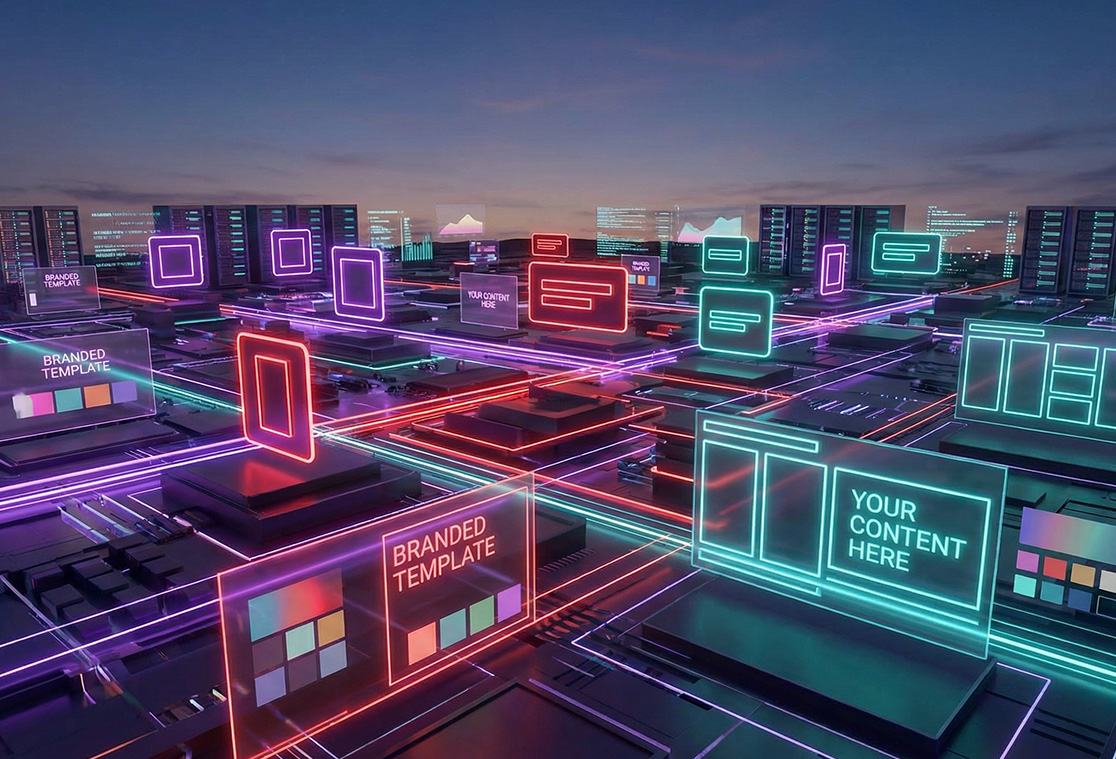
The Great Design Bottleneck
For decades, the relationship between "the creative team" and "the rest of the company" has been defined by a significant bottleneck. Marketing managers, sales reps, and social media coordinators often find themselves waiting days, or even weeks, for simple design requests. Conversely, design teams find themselves buried in "busy work"—resizing banners, updating dates on flyers, or swapping out photos in a presentation.
As we look toward the marketing demands of 2026, this model is no longer sustainable. Brands need to produce more content, for more channels, at a higher frequency than ever before. The solution is the democratization of design through Dynamic Brand Templates.
The Shift from "Asset Maker" to "System Architect"
The role of the professional designer is evolving. Instead of creating every single final file, the modern designer is becoming a System Architect. Their job is to build the "rules of the game"—defining the grid, the typography, and the color logic—and then embedding those rules into "Smart Templates."
With PolyPrism Design Templates, the designer creates the master layout once. They then "lock" the critical brand elements—such as the logo position, the brand fonts, and the color palette—while "unlocking" specific areas for text and imagery. This allows non-designers to self-serve their needs without any risk of "breaking" the brand's visual identity.
The Power of "Brand-Locked" Logic
What makes a "Smart Template" different from a standard Canva or PowerPoint file? It's the underlying brand logic.
- Fixed Typography Scales: In a standard document, a user might accidentally change a headline to a font that isn't in your Brand Kit. In a PolyPrism template, the font choices are restricted to your approved list, ensuring 100% adherence to your Digital Style Guide.
- Color Constrainment: Users can only select colors from your approved primary and secondary palettes. No more "neon green" buttons appearing in a "navy blue" brand world.
- Intelligent Image Handling: When a user uploads a photo into a template, the AI can automatically apply a brand-specific filter or overlay, ensuring that even amateur photography fits the brand's aesthetic.
Scaling Creativity: From One to One Thousand
The efficiency gains from dynamic templates are astronomical. Consider a global retail brand with 500 locations. Traditionally, if they wanted to run a local promotion, the central design team would have to create 500 separate files.
With Dynamic Templates, the central team creates one master template. Each local manager then logs in, types their specific location and offer, and the AI generates the final, high-resolution file instantly. This reduces the design turnaround time from weeks to seconds.
Empowering the "Citizen Designer"
By removing the "fear of doing it wrong," brands can unlock the creative potential of their entire workforce. A sales rep who feels empowered to create a professional, branded proposal using Poly Docs is a more confident and effective closer. A social media manager who can react to a trending topic in minutes using the Ad Designer generates more engagement than one who has to wait for a design ticket to be cleared.
This democratization of creativity fosters a sense of Brand Stewardship throughout the organization. When everyone has the tools to represent the brand beautifully, they take more pride in the brand's success.
Integration into the Full Branding Stack
Dynamic templates are most effective when they are part of a connected ecosystem. Push the finished designs directly to your website, social channels, or print vendors.
If you're unsure how to begin building your template library, the PolyPrism How-To Use Guide provides a step-by-step framework for identifying your "High-Frequency Assets"—those items that your team needs most often—and converting them into smart, scalable templates.
Conclusion: Future-Proofing Your Design Workflow
As we move toward a future where "content is currency," the brands that can produce high-quality, on-brand assets the fastest will win. Dynamic templates are the engine of that speed. They allow you to scale your visual output infinitely without sacrificing the control and consistency that build long-term brand equity. It is time to stop being a bottleneck and start being a system builder.